Cooling in commercial spaces is no longer just about maintaining temperature—it’s about creating a controlled, efficient, and comfortable environment that supports business operations. Whether it’s an office, retail outlet, hotel, or large industrial setup, the demand for consistent and cost-effective cooling has increased significantly.
This is where a modern hvac air conditioning system becomes essential. Designed to manage airflow, temperature, and energy consumption efficiently, these systems provide a comprehensive solution to the complex cooling challenges faced by commercial buildings today.
However, many businesses still struggle with uneven cooling, high electricity bills, maintenance issues, and space limitations. Understanding these challenges in depth is the first step toward selecting the right HVAC solution.
Understanding Commercial Cooling Challenges
Commercial buildings are structurally and functionally complex. Unlike residential spaces, they operate continuously and accommodate varying occupancy levels throughout the day.
These environments often face challenges such as:
- Uneven airflow distribution
- High energy consumption
- Frequent maintenance requirements
- Space and design constraints
To address these issues effectively, businesses need solutions that go beyond traditional air conditioning systems.
Uneven Cooling and Airflow Issues
One of the most noticeable problems in commercial spaces is inconsistent cooling. Certain areas may feel too cold while others remain warm, especially in large open layouts or buildings with multiple zones.
Modern businesses are increasingly focusing on fixing uneven cooling and airflow issues with modern hvac air conditioning systems, as balanced airflow plays a crucial role in maintaining comfort and productivity.
A well-designed hvac air conditioning system distributes air evenly across the space, ensuring that all areas receive consistent cooling. This not only improves comfort but also enhances overall system efficiency by reducing the need for excessive cooling in specific zones.
High Energy Consumption and Rising Costs
Energy consumption is one of the biggest concerns for commercial buildings. Cooling systems often run for extended hours, leading to high electricity bills and increased operational costs.
To tackle this, businesses are exploring how hvac air conditioning systems reduce high energy consumption in commercial buildings, particularly through the use of inverter technology and intelligent cooling mechanisms.
Modern HVAC systems adjust their output based on real-time demand rather than operating at full capacity continuously. This helps reduce unnecessary energy usage while maintaining optimal performance, making them a cost-effective solution for long-term operations.
Maintenance Challenges and Long-Term Costs
Another critical factor in commercial HVAC systems is maintenance. Frequent servicing, unexpected breakdowns, and part replacements can significantly increase overall costs.
This is why many organizations are now evaluating how hvac air conditioning systems help reduce long-term hvac maintenance and operational costs before making a purchase decision.
Advanced HVAC systems are designed for durability and consistent performance. By reducing wear and tear and operating efficiently under varying conditions, these systems minimize maintenance requirements and improve long-term reliability.
Space Constraints and Modern Design Requirements
Modern commercial spaces prioritize aesthetics and efficient use of available space. Traditional air conditioning units often occupy walls or floors, limiting design flexibility and reducing usable area.
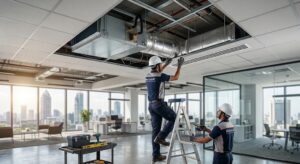
To overcome this, businesses are increasingly focusing on solving space constraints in commercial buildings with ceiling-mounted hvac air conditioning systems, where units are integrated into the ceiling structure.
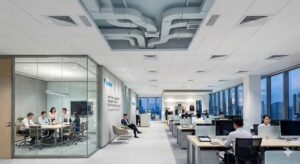
This approach not only saves space but also enhances the visual appeal of interiors. Ceiling-mounted systems provide powerful cooling without interfering with design elements, making them ideal for modern offices, showrooms, and hospitality environments.
The Role of HVAC Systems in Different Commercial Environments
A hvac air conditioning system is highly versatile and can be adapted to various commercial settings:
1) Offices
Ensures consistent temperature for improved employee productivity and comfort.
2) Retail Stores
Maintains a pleasant shopping environment, encouraging customers to stay longer.
3) Hospitality Sector
Provides silent and efficient cooling, enhancing guest experience.
4) Large Commercial Buildings
Handles complex layouts and high occupancy with ease.
This adaptability makes HVAC systems a reliable solution across industries.
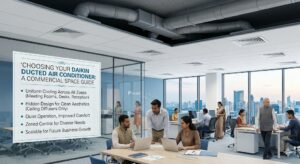
Choosing the Right HVAC Air Conditioning System
Selecting the right system is crucial for achieving optimal performance. Businesses need to consider factors such as:
- Space size and layout
- Cooling load requirements
- Energy efficiency ratings
- Installation feasibility
Understanding these factors helps ensure that the system operates efficiently without unnecessary strain or energy waste. A well-planned HVAC system not only improves performance but also reduces long-term costs.
Energy Efficiency as a Competitive Advantage
Energy efficiency is no longer just a technical feature—it is a business advantage. Companies that invest in efficient cooling systems can significantly reduce operational costs while also contributing to sustainability goals.
A modern hvac air conditioning system achieves this through:
- Smart temperature control
- Load-based operation
- Advanced compressor technology
These features allow businesses to maintain consistent cooling while minimizing energy usage.
Cost Optimization and ROI
Beyond energy savings, HVAC systems also offer long-term financial benefits. Reduced maintenance requirements, improved durability, and efficient performance contribute to better return on investment.
Businesses that focus on lifecycle cost rather than initial investment are more likely to benefit from advanced HVAC solutions in the long run.
Why Businesses Are Moving Towards HVAC Solutions
The shift toward HVAC systems is driven by the need for efficiency, scalability, and long-term savings.
A hvac air conditioning system provides:
- Reliable and consistent cooling
- Lower energy consumption
- Reduced maintenance costs
- Better space utilization
- Improved overall comfort
These benefits make HVAC systems the preferred choice for modern commercial buildings.
Conclusion
A hvac air conditioning system plays a vital role in solving the most pressing cooling challenges faced by commercial spaces today. From addressing airflow inconsistencies and reducing energy consumption to minimizing maintenance costs and optimizing space usage, these systems provide a complete and efficient solution.
Investing in the right HVAC system through a trusted daikin ac authorised dealer in mumbai not only improves performance but also ensures a comfortable, efficient, and future-ready environment for both employees and customers.