Modern commercial spaces are evolving rapidly. From corporate offices and retail showrooms to healthcare facilities and hospitality establishments, businesses are looking for cooling solutions that deliver consistent comfort, support operational efficiency, and complement modern interior design.
While traditional split air conditioners remain common in smaller spaces, many organizations are finding that managing multiple AC units becomes increasingly challenging as facilities grow. Uneven cooling, higher maintenance requirements, visible indoor units, and rising energy costs often create long-term concerns for business owners and facility managers.
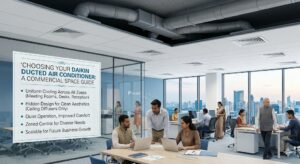
As a result, centralized cooling systems are becoming the preferred choice for commercial applications. Among the available options, the Daikin Ducted Air Conditioner has emerged as a popular solution due to its ability to provide uniform cooling, discreet installation, and efficient performance across multiple zones.
In this guide, we’ll explore why businesses are making the switch to a Duct Type Air Conditioner, how centralized cooling works, and the factors organizations should consider before investing in a Duct Air Conditioner system.
Understanding Centralized Cooling in Commercial Buildings
Centralized cooling refers to a system where conditioned air is distributed throughout a building from a central unit using a network of ducts. Instead of relying on several wall-mounted air conditioners operating independently, a centralized setup delivers cooling more systematically across different rooms and workspaces.
This approach has become increasingly relevant as businesses expand into larger facilities featuring:
- Open-plan offices
- Meeting and conference rooms
- Reception areas
- Retail floors
- Customer waiting zones
- Multi-department workspaces
In these environments, maintaining consistent indoor comfort can be difficult with multiple standalone air conditioning units. A centralized solution addresses this challenge by creating a more balanced and controlled cooling environment.
What Is a Daikin Ducted Air Conditioner?
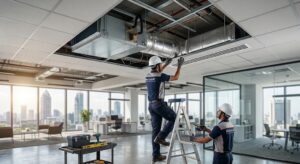
A Daikin Ducted Air Conditioner is a concealed air conditioning system designed to distribute cooled air through ducts installed above ceilings or within dedicated service spaces.
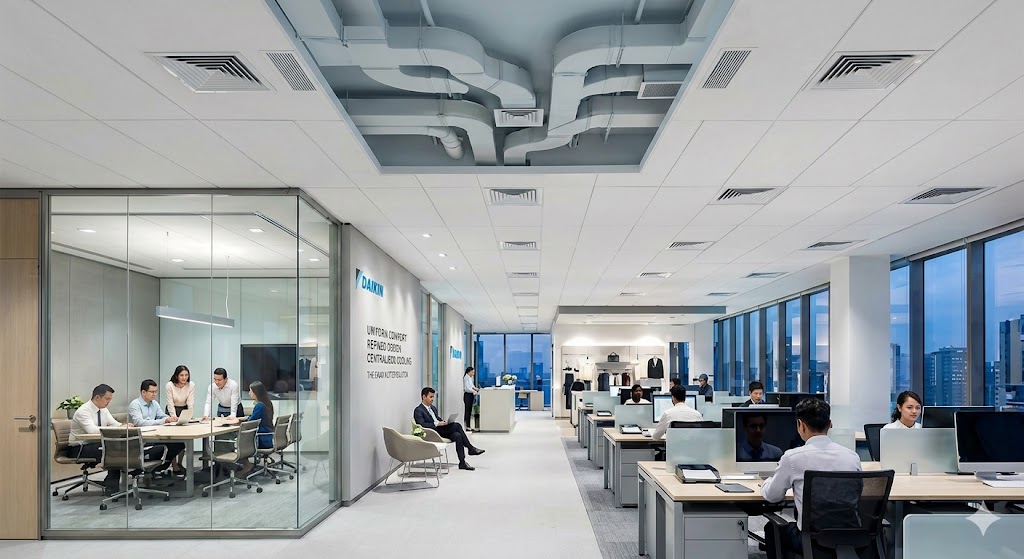
Unlike conventional split AC systems where indoor units are visible on walls, ducted systems keep the primary equipment hidden from view. Conditioned air is supplied through strategically placed vents or diffusers, creating a cleaner and more professional appearance.
This design offers several advantages for commercial spaces:
- Minimal visual disruption
- Uniform air distribution
- Better utilization of wall space
- Flexible cooling for multiple rooms
- Enhanced comfort across large areas
For businesses seeking a modern and scalable cooling solution, a Duct Type Air Conditioner often provides a more practical long-term option than multiple individual AC units.
Why Businesses Are Reconsidering Traditional Cooling Systems
Many commercial buildings initially install split air conditioners because of their lower upfront cost. However, as facilities grow, certain limitations become more noticeable.
1. Uneven Temperature Distribution
One common issue is inconsistent cooling between rooms. Areas located near indoor units may become excessively cold, while other sections remain warmer.
2. Increased Maintenance Complexity
Managing multiple air conditioning units often means multiple service schedules, inspections, and repair requirements.
3. Interior Design Limitations
Visible indoor units can interfere with carefully planned commercial interiors, particularly in premium offices, luxury retail stores, and hospitality environments.
4. Rising Energy Consumption
Cooling large commercial spaces with numerous independent systems can become less efficient over time, particularly when occupancy patterns vary throughout the day.
These challenges are driving businesses toward centralized cooling solutions that provide greater operational control and consistency.
Centralized Daikin Ducted Air Conditioners
1. Consistent Cooling Across Large Commercial Spaces
One of the most significant advantages of a Daikin Ducted Air Conditioner is its ability to deliver uniform cooling throughout a facility.
In commercial environments, occupant comfort directly impacts productivity, customer satisfaction, and overall workplace experience. Temperature fluctuations can create discomfort, distractions, and frequent complaints from employees or visitors.
A well-designed ducted system distributes conditioned air evenly, helping businesses maintain stable indoor temperatures across:
- Open workstations
- Executive cabins
- Meeting rooms
- Reception areas
- Customer-facing spaces
This balanced cooling environment contributes to improved comfort and a more professional atmosphere.
Real-World Example
Consider a 5,000-square-foot office operating six separate split AC units. Different usage patterns throughout the day may result in some rooms being overcooled while others remain warm.
A centralized Duct Air Conditioner system can help create a more consistent indoor climate by distributing air strategically across the entire workspace.
2. Enhanced Aesthetics and Better Use of Interior Space
Commercial interiors play a critical role in shaping customer perceptions and employee experiences.
Visible air conditioning units can disrupt architectural designs, particularly in premium environments where aesthetics matter. This is one reason many architects and interior designers recommend a Duct Type Air Conditioner for commercial projects.
Because the equipment is concealed within ceilings, only subtle vents and grilles remain visible.
This provides several design benefits:
- Cleaner wall surfaces
- Improved visual appeal
- Greater flexibility in furniture placement
- More professional interiors
- Better alignment with modern architectural concepts
For businesses that prioritize brand image and customer experience, aesthetics can be just as important as cooling performance.
3. Improved Energy Efficiency for Commercial Operations
Energy costs remain one of the most significant operational expenses for many businesses.
While cooling requirements vary by industry and building design, inefficient air conditioning systems can contribute substantially to monthly utility bills.
A properly designed Daikin Ducted Air Conditioner helps businesses optimize cooling distribution and reduce unnecessary energy waste.
Some key efficiency advantages include:
- More balanced airflow throughout the building
- Reduced need for multiple independent systems
- Better control over cooling zones
- Improved management of cooling loads
Over time, these factors can contribute to a more efficient and cost-effective cooling strategy.
4. Quieter Indoor Environments
Noise levels are often overlooked when selecting commercial cooling systems.
However, excessive background noise can affect employee concentration, customer comfort, and overall workplace satisfaction.
Because major components of a Duct Air Conditioner are typically installed away from occupied areas, ducted systems often create a quieter indoor environment compared to multiple wall-mounted units operating simultaneously.
This makes them particularly suitable for:
- Corporate offices
- Educational institutions
- Healthcare facilities
- Hotels
- Conference rooms
- Executive workspaces
A quieter atmosphere supports productivity and creates a more pleasant experience for occupants.
5. Greater Control Through Zoned Cooling
Different areas within a building rarely have identical cooling requirements.
For example:
- Meeting rooms may experience temporary occupancy spikes.
- Reception areas often face higher foot traffic.
- Executive cabins may require different temperature settings.
- Retail sections can experience fluctuating customer volumes.
Modern Daikin Ducted Air Conditioner systems can support zoning strategies that allow businesses to manage cooling more effectively.
Instead of cooling every area equally at all times, facility managers can adjust temperatures according to occupancy patterns and operational requirements.
This flexibility improves both comfort and energy efficiency.
Daikin Ducted Air Conditioner vs Multiple Split AC Units
When evaluating cooling solutions for commercial spaces, many businesses compare a Daikin Ducted Air Conditioner with a setup consisting of multiple split AC units. While both options can effectively cool indoor environments, their long-term performance and management requirements differ significantly.
| Feature | Daikin Ducted Air Conditioner | Multiple Split AC Units |
| Cooling Coverage | Multiple rooms and large spaces | Individual rooms |
| Appearance | Concealed installation | Visible indoor units |
| Cooling Consistency | More uniform | Can vary between rooms |
| Noise Levels | Generally quieter in occupied areas | Multiple indoor units may generate more noise |
| Maintenance Management | Centralized | Multiple units to service |
| Scalability | Better suited for expansion | May require additional installations |
| Long-Term Management | Easier for large facilities | More complex as property size increases |
For small offices, split systems may still be a practical option. However, for larger commercial spaces requiring centralized cooling, a Duct Type Air Conditioner often offers greater operational efficiency and a cleaner overall solution.
Is a Daikin Ducted Air Conditioner Worth the Investment?
One of the most common questions business owners ask is whether the higher upfront investment associated with a Daikin Ducted Air Conditioner is justified.
The answer depends on the building’s size, cooling requirements, and long-term operational goals.
1. Understanding the Initial Investment
A ducted system typically requires:
- Professional cooling load calculations
- Duct design and installation
- Ceiling space for duct routing
- Strategic diffuser placement
- Professional commissioning
These factors generally make installation more involved than installing a few wall-mounted units.
However, focusing solely on initial costs can overlook the broader operational benefits of centralized cooling.
2. Looking Beyond Upfront Costs
Commercial cooling systems should be viewed as long-term infrastructure investments.
A properly designed Duct Air Conditioner system can help businesses achieve:
- Better temperature management
- Reduced visual clutter
- Simplified facility operations
- Improved occupant comfort
- Greater flexibility as business needs evolve
For organizations planning to occupy a facility for many years, these advantages often contribute to long-term value.
Which Businesses Benefit Most?
A Daikin Ducted Air Conditioner is often a strong fit for:
- Medium and large offices
- Retail chains
- Corporate headquarters
- Hotels and serviced apartments
- Educational campuses
- Healthcare facilities
- Commercial buildings with multiple rooms
The larger and more complex the facility, the greater the potential benefits of centralized cooling.
Industries Benefiting Most from Duct Air Conditioners
Different industries have unique cooling requirements. The flexibility of a Duct Type Air Conditioner makes it suitable across a wide range of commercial applications.
1. Corporate Offices
Employee comfort plays an important role in workplace productivity.
Uneven temperatures can create distractions and discomfort, particularly in large offices with varying occupancy levels.
A Daikin Ducted Air Conditioner helps maintain a consistent indoor environment while supporting modern office aesthetics.
2. Retail Stores and Showrooms
Customer experience is a critical factor in retail success.
Visitors are more likely to spend time browsing when indoor conditions remain comfortable.
A Duct Air Conditioner provides:
- Consistent cooling throughout the store
- Better integration with interior design
- More wall space for displays and branding
3. Hotels and Hospitality Facilities
Guest satisfaction often depends on maintaining comfortable indoor environments.
Hotels benefit from ducted systems because they provide:
- Quiet operation
- Uniform cooling
- Improved room aesthetics
- Better integration with interior décor
4. Healthcare Facilities
Hospitals, clinics, and diagnostic centers require controlled indoor environments for both patient comfort and operational efficiency.
Centralized cooling systems can help maintain more consistent conditions across different areas of the facility.
5. Educational Institutions
Classrooms, lecture halls, libraries, and administrative offices often have different occupancy levels throughout the day.
A Duct Type Air Conditioner can help educational institutions manage comfort more effectively across multiple zones.
Common Mistakes Businesses Make When Choosing a Duct Type Air Conditioner
Selecting the right cooling system involves more than simply choosing a brand or capacity.
Here are some common mistakes businesses should avoid.
1. Choosing the Wrong Capacity
An undersized system may struggle to maintain comfortable temperatures during peak demand.
An oversized system can lead to inefficient operation and unnecessary energy consumption.
Proper cooling load calculations are essential.
2. Ignoring Future Expansion Plans
Businesses often focus only on current requirements.
However, office expansions, departmental growth, or facility renovations can increase cooling demands in the future.
Planning for scalability helps avoid costly modifications later.
3. Poor Duct Design
Even the most advanced Daikin Ducted Air Conditioner cannot perform optimally if the duct network is poorly designed.
Improper airflow distribution may result in:
- Hot spots
- Uneven cooling
- Reduced efficiency
- Occupant discomfort
Professional duct design is crucial to system performance.
4. Focusing Only on Purchase Price
The lowest initial cost does not always deliver the best long-term value.
Businesses should evaluate:
- Operating efficiency
- Ease of maintenance
- Scalability
- Occupant comfort
- Lifecycle performance
A broader perspective often leads to better investment decisions.
5. Overlooking Maintenance Planning
Like any commercial HVAC system, a Duct Air Conditioner requires periodic inspection and maintenance.
Developing a maintenance strategy from the outset helps ensure consistent performance and system longevity.
Factors to Consider Before Installing a Daikin Ducted Air Conditioner
Before investing in a centralized cooling system, businesses should assess several important factors.
1. Building Layout
The size and configuration of the property directly influence system design.
2. Ceiling Availability
Ductwork requires adequate ceiling space for routing and installation.
3. Occupancy Patterns
Areas with fluctuating occupancy levels may benefit from zoning strategies.
4. Cooling Load Requirements
Accurate calculations ensure the system is appropriately sized for the building.
5. Future Business Growth
Expansion plans should be considered during the design phase to support long-term flexibility.
6. Energy Efficiency Objectives
Organizations focused on operational efficiency should evaluate cooling solutions as part of a broader energy management strategy.
Why Daikin Continues to Be a Trusted Choice
When businesses invest in centralized cooling, reliability becomes a key consideration.
Daikin has established a strong reputation in the commercial HVAC industry through its focus on performance, innovation, and long-term system dependability.
For organizations seeking a Duct Type Air Conditioner capable of supporting modern commercial environments, Daikin remains a trusted option across multiple sectors.
Its ducted systems are widely used in offices, retail facilities, hospitality projects, educational institutions, and healthcare environments where consistent cooling and operational efficiency are priorities.
Building a More Efficient Commercial Cooling Strategy
As commercial spaces become more sophisticated, businesses are looking beyond basic air conditioning solutions and investing in systems that support comfort, efficiency, and long-term operational goals.
A Daikin Ducted Air Conditioner offers a practical approach to centralized cooling by delivering consistent temperatures, cleaner aesthetics, quieter operation, and simplified management across large facilities. Whether you’re designing a new office, upgrading a retail showroom, or planning a commercial expansion, a well-designed Duct Air Conditioner system can contribute significantly to occupant comfort and overall building performance.
For businesses exploring reliable centralized cooling solutions, the team at Becool AC can help assess your requirements and recommend the most suitable ducted air conditioning system for your commercial space.