Energy consumption is one of the biggest challenges for commercial buildings today. Offices, retail outlets, hospitals, and industrial facilities all rely heavily on cooling systems that run for long hours, often leading to rising electricity bills and inefficient energy usage.
An advanced hvac air conditioning system plays a crucial role in solving this problem. As discussed in our detailed guide on solving commercial cooling challenges, businesses today need smarter and more efficient cooling strategies. With modern technology, businesses can significantly reduce energy consumption while maintaining consistent indoor comfort. From intelligent controls to inverter-driven compressors, today’s systems are designed to optimise performance without increasing operational costs.
Why Commercial Buildings Face High Energy Consumption
Commercial spaces typically experience higher cooling loads due to:
- Large floor areas requiring continuous cooling
- High occupancy levels throughout the day
- Heat generated from equipment and lighting
- Poor airflow distribution in traditional systems
Older or inefficient cooling setups often operate at fixed speeds, consuming maximum power regardless of actual demand. In many cases, these inefficiencies also lead to uneven cooling and airflow issues, which can further increase energy consumption if not addressed properly. This is where upgrading to a modern hvac air conditioning system becomes essential for energy efficiency.
Role of Modern HVAC Air Conditioning Systems in Energy Efficiency
1. Inverter Technology for Smart Energy Use
One of the most impactful innovations in HVAC is inverter technology. Unlike conventional systems that frequently turn on and off, inverter-based systems adjust compressor speed based on cooling demand.
This results in:
- Reduced power consumption
- Stable temperature control
- Lower wear and tear on components
Many advanced solutions, including a daikin hvac system, utilise inverter technology to deliver optimal performance while minimising energy wastage.
2. Zoned Cooling for Better Control
Modern hvac solutions allow businesses to divide spaces into multiple zones. Each zone can be cooled independently based on occupancy and usage.
For example:
- Conference rooms can be cooled only when in use
- Storage areas can operate at lower cooling levels
- Office floors can maintain different temperature settings
This becomes even more effective when combined with proper airflow planning to eliminate hot and cold spots across large commercial spaces. This targeted approach prevents unnecessary energy consumption and improves overall system efficiency.
3. Smart Controls and Automation
Automation plays a key role in reducing electricity usage. Today’s hvac air conditioning system can be integrated with smart controllers that:
- Monitor real-time temperature and humidity
- Adjust cooling based on occupancy
- Schedule operations to avoid unnecessary runtime
Smart automation not only improves efficiency but also plays a key role in reducing long-term maintenance and operational costs. These intelligent systems ensure that energy is used only when needed, reducing wastage significantly.
Benefits of Choosing Energy-Efficient HVAC Systems
Beyond energy savings, businesses must also consider how system design and installation impact space utilisation and overall efficiency
Lower Electricity Bills
Energy-efficient systems reduce power consumption, directly lowering monthly utility costs. Over time, this leads to significant savings for businesses.
Improved System Performance
Efficient systems maintain consistent cooling without overloading components, ensuring better performance even during peak usage.
Sustainability and Environmental Impact
Reducing energy consumption also lowers carbon emissions, helping businesses meet sustainability goals and regulatory standards.
Solutions like daikin commercial hvac systems are designed with energy efficiency and environmental responsibility in mind, making them ideal for modern commercial spaces.
Importance of Professional Installation and Expertise
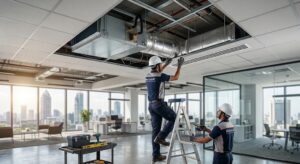
Even the most advanced system will not perform efficiently without proper installation. Working with experienced professionals ensures:
- Correct system sizing
- Proper airflow design
- Efficient duct layout
- Optimal placement of indoor and outdoor units
Businesses looking for reliable installation and support can benefit from consulting trusted daikin hvac dealers in mumbai, who understand local requirements and building structures.
Long-Term Impact on Operational Efficiency
Investing in an energy-efficient hvac air conditioning system is not just about reducing electricity bills—it’s about improving overall operational efficiency.
When energy usage is optimised:
- Equipment lifespan increases
- Maintenance requirements reduce
- System reliability improves
These benefits contribute to long-term cost savings and better business performance, making HVAC upgrades a strategic investment.
Conclusion
High energy consumption in commercial buildings is a growing concern, but it can be effectively managed with the right approach. Modern hvac air conditioning system solutions, powered by inverter technology, smart controls, and zoned cooling, offer a practical way to reduce electricity usage without compromising comfort.
While energy efficiency is a key advantage, addressing airflow challenges, optimising system design, and reducing long-term costs are equally important for achieving complete HVAC performance in commercial spaces.
By adopting advanced systems such as a daikin hvac system and partnering with a reliable daikin authorised dealer in mumbai, businesses can implement efficient hvac solutions that deliver long-term savings, sustainability, and consistent performance.