In India’s rapidly evolving commercial landscape, the demand for efficient, scalable, and energy-conscious climate control systems has never been higher. From IT parks and shopping malls to hospitals and manufacturing facilities, businesses are actively seeking advanced hvac solutions that go beyond basic cooling. Among the many brands available in the market, Daikin has consistently emerged as a preferred choice for commercial applications.
But what exactly makes Daikin stand out in 2026? Why are more businesses, consultants, and facility managers opting for daikin hvac system over other options? Let’s explore the key reasons behind Daikin’s strong reputation and how it continues to lead the commercial HVAC segment in India.
Understanding the Importance of Commercial HVAC Systems
Before diving into the brand itself, it’s important to understand why choosing the right hvac air conditioning system is critical for commercial spaces.
Commercial HVAC systems are not just about maintaining temperature—they directly impact:
- Employee productivity and comfort
- Energy consumption and operational costs
- Indoor air quality and health standards
- Equipment longevity and maintenance cycles
A poorly designed system can lead to high electricity bills, uneven cooling, and frequent breakdowns. This is why businesses today prioritize reliable and intelligent hvac solutions that align with long-term efficiency goals.
Daikin’s Legacy in the HVAC Industry
Daikin has built a global reputation as a pioneer in heating, ventilation, and air conditioning technology. With decades of innovation and a strong presence in India, the company has adapted its offerings to suit the country’s diverse climate conditions and commercial requirements.
What sets daikin hvac products apart is their focus on:
- Energy efficiency
- Advanced technology
- Environmental sustainability
- Customization for different industries
This combination has made Daikin a trusted name for large-scale and mission-critical installations.
Advanced Technology That Delivers Performance
One of the primary reasons businesses choose a daikin hvac system is its technological edge. Daikin continuously invests in research and development to introduce smarter and more efficient systems.
Key technological advantages include:
1. Inverter Technology
Daikin systems use advanced inverter compressors that adjust cooling output based on real-time demand. This reduces energy consumption significantly compared to conventional systems.
2. VRV/VRF Systems
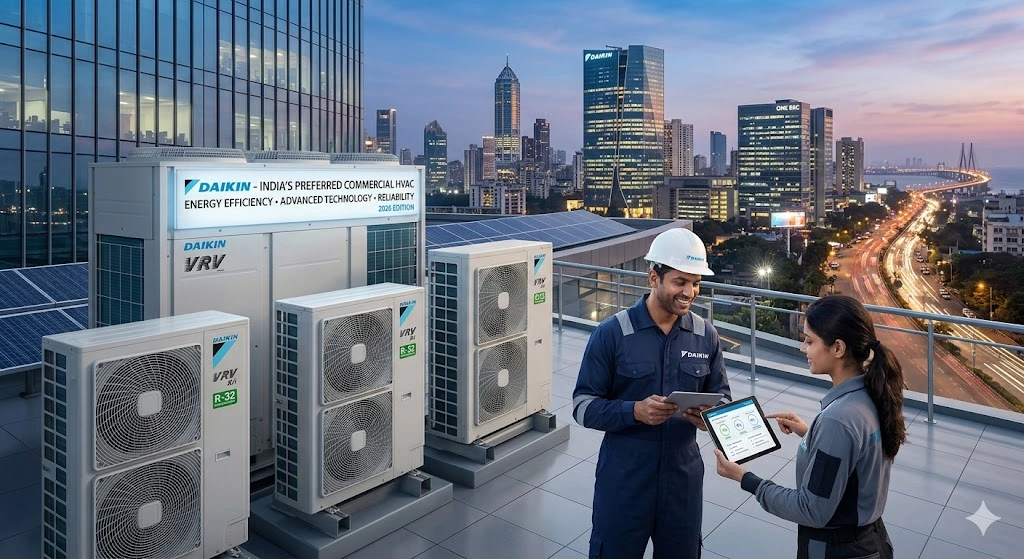
Variable Refrigerant Volume (VRV) systems are a game changer in commercial HVAC. They allow multiple indoor units to operate on a single outdoor unit, offering flexibility and precise temperature control across different zones.
3. Intelligent Controls
Modern daikin commercial hvac systems come with centralized control systems, enabling facility managers to monitor and optimize performance remotely.
4. Energy Monitoring Systems
Businesses can track energy usage and identify inefficiencies, helping reduce operational costs over time.
Energy Efficiency: A Major Decision Factor
With rising electricity costs in India, energy efficiency has become a top priority for commercial establishments. Daikin excels in this area by offering some of the most energy-efficient hvac solutions in the market.
Benefits of energy-efficient systems:
- Lower electricity bills
- Reduced carbon footprint
- Compliance with green building standards
- Improved ROI over time
Daikin hvac products are designed to meet and exceed energy efficiency benchmarks, making them ideal for businesses aiming for sustainability certifications like LEED or IGBC.
Customizable HVAC Solutions for Every Industry
No two commercial spaces are the same. A hospital has very different HVAC requirements compared to a retail showroom or a data center.
Daikin understands this and provides highly customizable hvac solutions tailored to specific industries, such as:
- Healthcare (precise temperature and air purity control)
- Hospitality (guest comfort and quiet operation)
- Retail (uniform cooling across large areas)
- Industrial spaces (durability and performance under heavy loads)
- Corporate offices (energy efficiency and zoning flexibility)
This ability to adapt makes daikin commercial hvac systems a versatile choice across sectors.
Superior Indoor Air Quality
Post-pandemic, indoor air quality has become a critical consideration for businesses. Daikin integrates advanced filtration and ventilation features into its hvac air conditioning system to ensure cleaner and healthier indoor environments.
Key features include:
- High-performance air filters
- Humidity control
- Fresh air integration
- Reduced airborne contaminants
These features are particularly important for environments like hospitals, schools, and offices where air quality directly affects health and productivity.
Reliability and Long-Term Durability
Commercial HVAC systems are a significant investment, and businesses expect them to perform reliably for years. Daikin has built a reputation for durability and consistent performance.
Why Daikin systems last longer:
- High-quality components
- Rigorous testing standards
- Strong after-sales support
- Efficient maintenance design
This reliability reduces downtime and ensures uninterrupted operations, which is crucial for commercial facilities using daikin hvac system.
Strong Service Network in India
Another major advantage of choosing Daikin is its extensive service and dealer network across India. For businesses in metropolitan cities like Mumbai, finding trusted daikin hvac dealers in mumbai is easy.
A strong local presence ensures:
- Faster installation and commissioning
- Timely maintenance and servicing
- Easy availability of spare parts
- Quick response during emergencies
This localized support plays a crucial role in maintaining system efficiency and longevity.
Sustainability and Eco-Friendly Approach
As environmental regulations tighten, businesses are actively looking for eco-friendly hvac solutions. Daikin leads the way with its commitment to sustainability.
Key initiatives include:
- Use of eco-friendly refrigerants
- Energy-efficient system designs
- Reduced greenhouse gas emissions
- Support for green building certifications
By choosing daikin hvac products, businesses not only save on energy costs but also contribute to environmental conservation.
Cost vs Value: A Smart Investment
While daikin commercial hvac systems may have a higher upfront cost compared to some alternatives, they offer exceptional long-term value.
Here’s why:
- Lower operating costs
- Reduced maintenance expenses
- Longer lifespan
- Better performance consistency
When evaluated over the lifecycle of the system, daikin hvac system proves to be a cost-effective investment for commercial spaces.
Why Businesses in India Trust Daikin in 2026
In 2026, the expectations from HVAC systems have evolved. Businesses are no longer looking for just cooling—they want intelligent, efficient, and sustainable systems that align with their operational goals.
Daikin delivers on all these fronts by offering:
- Advanced and reliable daikin hvac products
- Industry-specific hvac solutions
- Strong dealer and service network
- Cutting-edge technology and innovation
- Commitment to sustainability
This comprehensive approach has made daikin commercial hvac systems the preferred choice across India.
Final Thoughts
Choosing the right hvac air conditioning system is a critical decision that impacts comfort, costs, and long-term efficiency. Daikin has consistently proven its capability to meet the complex demands of commercial spaces in India.
Whether you are setting up a new facility or upgrading an existing system, investing in daikin hvac products ensures reliability, efficiency, and future-ready performance.
For businesses looking for trusted daikin hvac dealers in mumbai or across India, partnering with experienced providers can make all the difference in system design, installation, and maintenance.
As the commercial sector continues to grow, Daikin remains a brand that combines innovation, performance, and sustainability—making it a clear leader in the HVAC industry.