
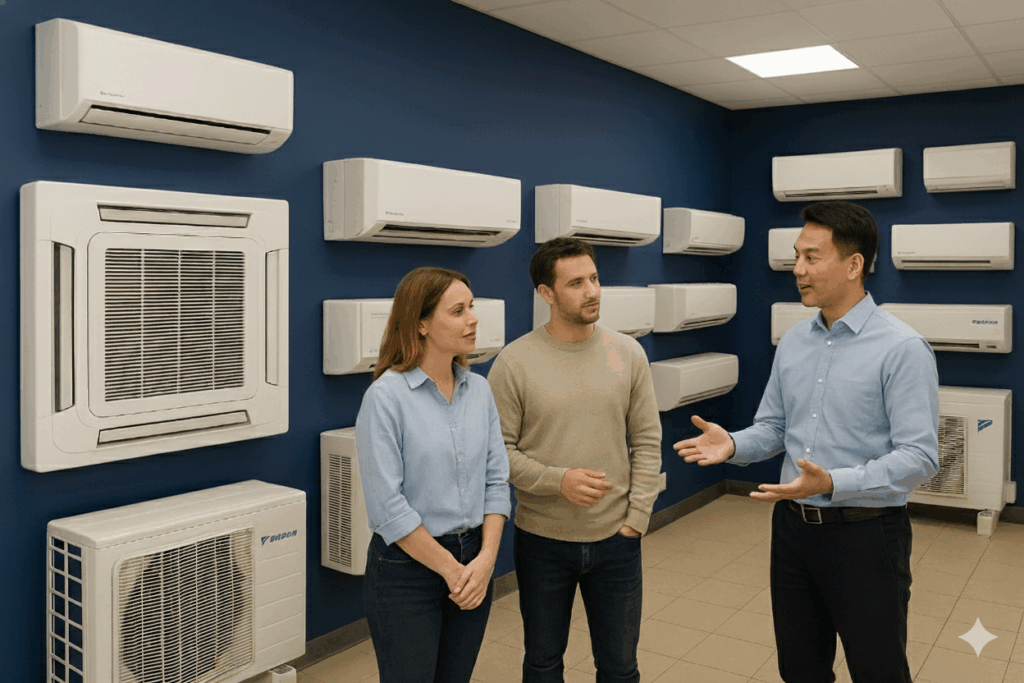
Choosing the right air conditioner is one of the most critical decisions for maintaining a comfortable and productive environment, whether it’s your home or commercial space. For those with false or suspended ceilings, the Daikin cassette air conditioner stands out as a sleek, powerful and discreet cooling solution.
But with options ranging from compact units to industrial-grade systems, how do you ensure you don’t end up with an AC that’s too weak (undersized) or too powerful (oversized)? The secret lies in accurately assessing the size, or capacity, you need.
This guide will help you understand cassette AC sizes, measured primarily by tonnage and BTU, factors to consider before buying, and expert tips for choosing the right system for your space.
Cassette AC Capacity Explained: Tonnage & BTU
When we talk about the size of an air conditioner, we are referring to its cooling capacity, not its physical dimensions. This capacity is measured in Tons or BTUs (British Thermal Units).
- 1 Ton of cooling capacity is equivalent to approximately 12,000 BTUs per hour (BTUh).
A correctly sized HVAC ceiling cassette unit ensures consistent cooling and maximum energy efficiency. An undersized unit will run constantly without achieving the desired temperature, wasting energy. An oversized unit will cycle on and off too frequently (short-cycling), leading to poor dehumidification and an uncomfortable, clammy feeling in the room.
Common Cassette AC Sizes and Area Coverage
The following table provides a general guideline for choosing capacity based on the square footage of a room with standard 8–10 ft ceilings and average insulation.
| AC Capacity | BTU Equivalent | Approximate Area Coverage | Ideal Application |
|---|---|---|---|
| 1 Ton | 12,000 BTUh | 120–150 sq. ft. | Small offices, average bedrooms, small retail counters. |
| 1.5 Tons | 18,000 BTUh | 150–220 sq. ft. | Large bedrooms, medium office cabins, small living rooms. |
| 2 Tons | 24,000 BTUh | 220–300 sq. ft. | Large living areas, small conference rooms, medium-sized retail shops. A popular choice, the Daikin 2-ton cassette ac offers a balance of power and efficiency for many commercial spaces. |
| 3 Tons | 36,000 BTUh | 300–450 sq. ft. | Open-plan offices, large halls, spacious restaurants. When cooling larger zones, a Daikin 3-ton cassette ac provides the necessary power. |
| 4 Tons | 48,000+ BTUh | 450+ sq. ft. | Banquet halls, showrooms, large restaurants, and lobbies. For expansive spaces, you may need a Daikin 4-ton cassette ac or multiple large units. |
Factors to Consider When Choosing a Cassette AC
Selecting the right 4-way cassette air conditioner or one way ceiling cassette AC isn’t just about matching tonnage with room size. Several other factors affect cooling performance and energy usage.
1. Room Size and Ceiling Height
Start by calculating your room’s total area and volume. Higher ceilings mean more air to cool, which can demand a higher capacity unit. For example, a 2-ton unit might work for a 250 sq. ft. room with an 8-foot ceiling, but the same room with a 12-foot ceiling could require a 3-ton model.
2. Sunlight and Heat Exposure
Rooms with large windows or direct sunlight need more cooling power. South- or west-facing rooms in Mumbai, for instance, experience higher heat load due to sun exposure and may benefit from a slightly higher-capacity HVAC ceiling cassette unit.
3. Layout and Airflow
Cassette ACs work best in open layouts that allow air to circulate freely. If furniture, partitions, or decor block airflow, the AC might need to work harder. Models like the Daikin one way cassette AC or corner cassette AC are great options for rooms with specific layout challenges. Choosing the right Daikin cassette air conditioner ensures efficient cooling even in rooms with tricky layouts.
4. Occupancy and Appliances
Spaces that frequently host many people or contain multiple electronic devices, such as offices or conference halls, tend to generate more heat. In these cases, opting for a Daikin 3-ton cassette AC or higher capacity model can help maintain comfortable temperatures consistently.
5. Energy Efficiency and Technology
Always look for energy-efficient inverter models with higher SEER ratings. These systems regulate compressor speed based on the cooling requirement, reducing energy wastage. A Daikin 1 way cassette AC or inverter-enabled 4-way cassette air conditioner can deliver powerful performance while keeping your energy bills in check.
Different Types of Cassette ACs
Understanding the type of cassette AC helps in selecting the right system for your room’s design and airflow needs:
- One Way Ceiling Cassette AC: Blows air in a single direction. Ideal for rooms where targeted airflow is required.
- Two Way Cassette AC: Directs air across two sides, suitable for medium-sized spaces with simple layouts.
- Four Way Cassette AC: Provides 360-degree cooling with multi-directional airflow. Perfect for large halls, open offices, or restaurants.
- Corner Cassette AC: Designed for tight or uniquely shaped spaces where standard placement isn’t possible.
Installation Considerations for Cassette ACs
Proper installation is key to ensuring maximum efficiency. Consider these factors:
- Ceiling Height and Space: Cassette ACs require a false or suspended ceiling cavity. Ensure there’s enough clearance for the unit, ducting, and drainage.
- Airflow Management: Check for any furniture or partitions that could obstruct air movement. Multi-directional vane control can help avoid hot or cold spots.
- Maintenance Access: Ensure easy access for cleaning filters, checking refrigerant lines, and servicing.
Common Mistakes to Avoid When Choosing Cassette ACs
Even with the right research, users sometimes make mistakes that reduce performance or increase costs:
- Oversizing the Unit: Installing a unit too powerful for the room can lead to short cycling, inefficient cooling, and higher energy bills.
- Undersizing the Unit: A smaller unit struggles to maintain comfort and can wear out faster due to constant operation.
- Ignoring Ceiling Design: Not considering ceiling height or layout can result in poor airflow distribution.
- Neglecting Heat Load: Failing to account for sunlight, appliances, and occupancy can reduce AC efficiency.
When to Seek Professional Help
For large or complex spaces, irregular layouts, high ceilings, or rooms with heavy sunlight and heat-generating equipment, a professional can accurately determine the right cassette AC size. This ensures even cooling and avoids oversizing or undersizing the unit.
Structural constraints like shallow or uniquely designed ceilings may also require expert assessment. Consulting an HVAC technician guarantees proper installation, optimal performance, and energy-efficient operation for your Daikin cassette air conditioner.
Conclusion
Choosing the right cassette AC ensures your space stays comfortable year-round while avoiding unnecessary costs. Don’t compromise on comfort or efficiency—let Be Cool guide you to the perfect Daikin cassette AC for your needs
From a cozy 2-ton Daikin cassette AC for your living room to a powerful 4-ton unit for a commercial hall, the right AC keeps everyone comfortable while saving on energy bills. As a Daikin authorised dealer in Mumbai, Be Cool ensures your cooling solution is reliable, efficient, and perfectly suited to your needs.
Ready to enjoy efficient and comfortable cooling? Contact Be Cool, a Daikin authorised dealer in Mumbai and find the ideal cassette AC for your home or office.